
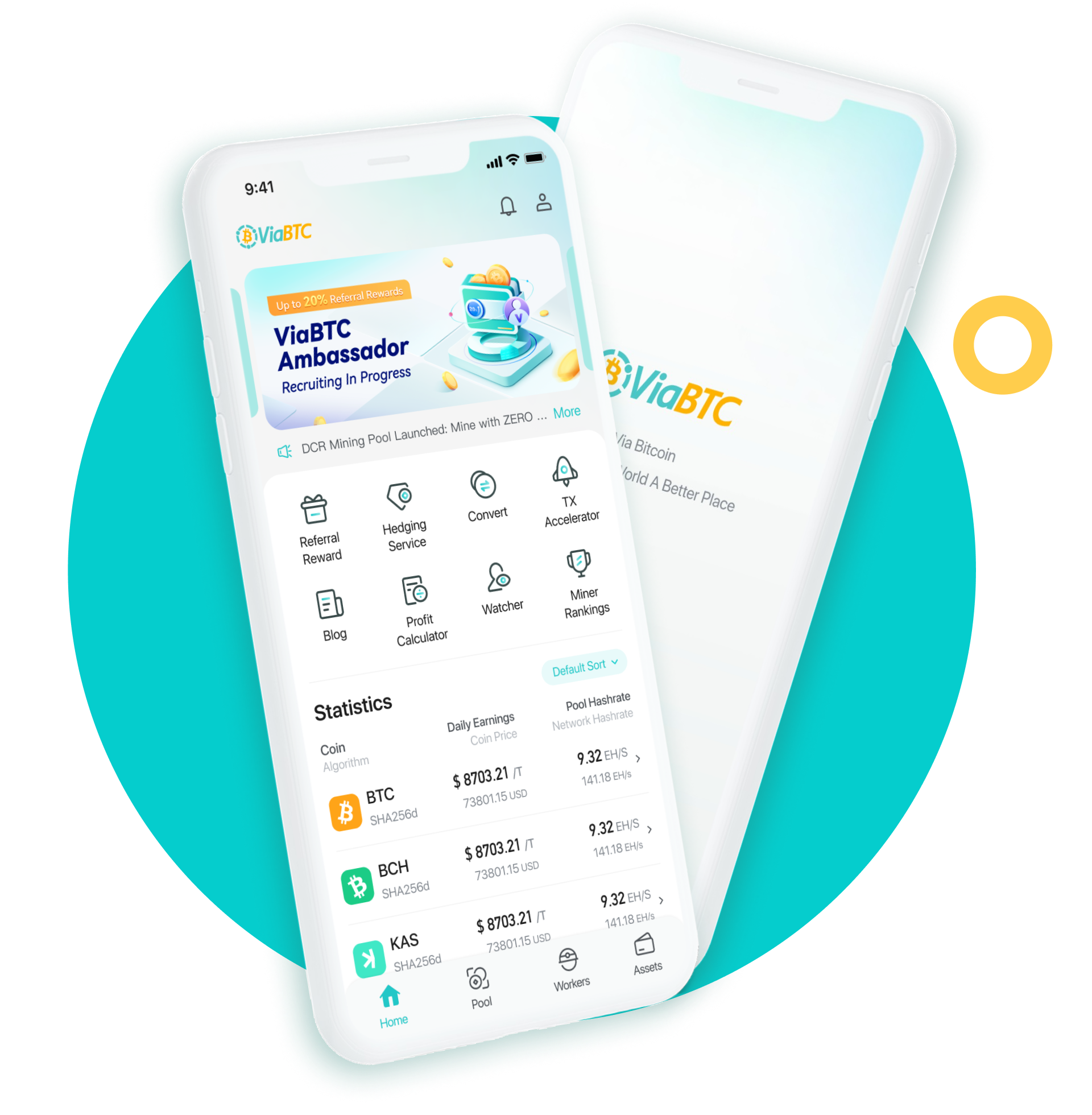
By cutting traditional 24-hour payout friction to zero via hourly distributions, ViaBTC captures institutional volume, maintaining a 100% uptime record since 2016 across a 150-country network. This setup secures over 11% of the global Bitcoin network hashrate by distributing block rewards through customizable PPS+ or PPLNS setups while eliminating standard 2.0% mainnet transaction fees through zero-cost internal transfers.
Miners look for continuous payout tools because standard 24-hour pool settlement cycles tie up heavy operational liquidity during sharp market adjustments. Operating with an hourly settlement model since 2016 allows mining firms to access realized revenue 24 times a day, maintaining baseline liquidity.
Institutional operations running thousands of Antminer S21 units use hourly distributions to pay electricity bills in local fiat currencies without holding market risk overnight.
This exact velocity of capital distribution reduces holding risk by 95% compared to legacy mining pools that hold customer funds until midnight server time.
Frequent distributions become unprofitable if mainnet transaction costs consume 3.0% to 5.0% of every outbound transfer during high network congestion. By creating an internal transfer channel to the CoinEx platform, miners transfer assets instantly with a 0% execution fee.
| Transfer Method | Average Fee Rate | Settlement Frequency |
| Standard Mainnet Tx | 2.5% - 7.0% | 24 Hours |
| ViaBTC Internal Transfer | 0.0% | Hourly |
A site operating 500 PH/s saves up to $12,000 monthly by avoiding standard on-chain tx fees when routing assets to exchange wallets.
Avoiding on-chain fees protects baseline operational margins, allowing operations to allocate resources into redundant network connections and higher efficiency hashing hardware. This infrastructure relies on a distributed matrix of stratum nodes placed in major global data hubs to minimize packet loss.
A 2025 network performance audit showed that reducing stratum ping times from 120ms to under 15ms lowers the rate of stale shares from 1.8% to less than 0.3%.
Low stale rates ensure that mining rigs operating in remote cold-climate deployment zones receive maximum credit for every submitted share.
Miners running high-density facilities need multiple risk frameworks to match different energy pricing models and varying investor timelines. ViaBTC supports this through three structural settlement methods:
-
PPS+: Delivers predictable daily revenue by paying out theoretical block rewards and sharing network transaction fees.
-
PPLNS: Rewards continuous uptime based on actual blocks discovered by the pool during specific submission intervals.
-
SOLO: Allocates the full block reward minus a 1.0% pool fee directly to the single owner of the solving hardware.
Providing these choices helps operations adjust their revenue models when global network difficulty increases by more than 8.5% within a single epoch.
Flexibility in settlement options helps miners manage structural difficulty changes, while automation tools allow hardware to shift between different networks. Smart Mining systems automatically move compatible ASIC rigs between BTC and BCH by tracking real-time profitability indexes every 60 seconds.
Automated switching systems helped test sites achieve a 4.2% increase in net denominated revenue over a fixed 90-day hardware evaluation window.
This automated redirection happens on the pool side without needing firmware updates or manual configuration changes at the physical facility.
Algorithmic switching boosts baseline hardware efficiency, and the pool further increases output by using merged mining setups on identical hashing lines. Rigs pointing hashrate to the main network receive secondary auxiliary tokens like Syscoin without using more electricity or increasing thermal loads.
| Asset Pair | Primary Reward | Auxiliary Reward | Extra Power Draw |
| BTC / SYS | 100% | 100% | 0W |
| LTC / DOGE | 100% | 100% | 0W |
This secondary distribution provides an extra 1.5% to 2.3% in gross revenue, helping offset rising global power tariffs.
Maximizing secondary revenue streams helps miners handle network halvings, where raw block rewards drop by 50% and force older hardware out of production. Using an integrated auto-conversion engine allows operators to set rules that swap auxiliary tokens into stablecoins every 60 minutes.
Data from a 2024 industrial test group showed that auto-conversion rules protected miners from an average 14% downside drop during volatile weekend trading hours.
Locking in fiat values quickly gives operations stable cash flows to cover monthly lease fees and localized maintenance expenses.