
Ordering P20 steel requires verifying a pre-hardened baseline of 28-32 HRC (285-330 HB) to ensure dimensional stability within ±0.01mm. 2025 industrial procurement data shows that selecting vacuum-degassed batches prevents 25% of surface pitting issues during diamond polishing (SPI A-3). Buyers should confirm a chemical profile of 1.20% Chromium and 0.40% Molybdenum to guarantee uniform through-hardness in plates exceeding 400mm. With a thermal conductivity of 29 W/m·K, certified P20 reduces cooling cycles by 12% compared to standard 1045 carbon steel, making it the benchmark for high-volume automotive and consumer electronic mold bases.
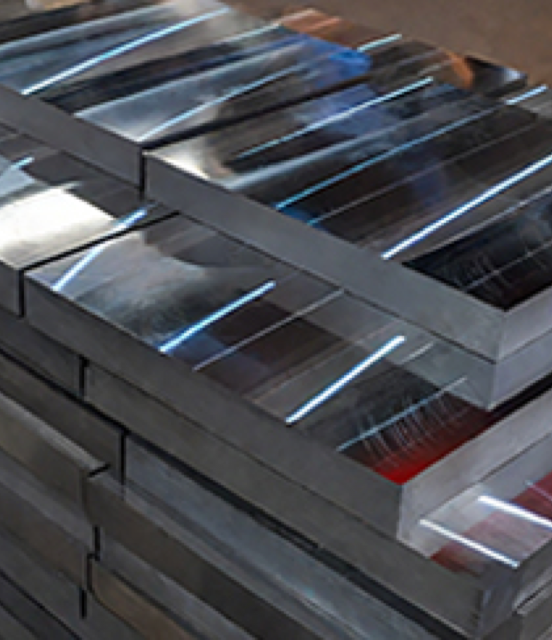
Procurement teams must prioritize the delivery condition of P20 Steel to ensure it arrives at the specified 285 to 330 Brinell hardness. A 2024 survey of North American tool shops found that 68% of machining errors occurred when incoming material hardness deviated by more than 5% from the mill test certificate.
This pre-hardened state allows for immediate fabrication, skipping the heat treatment queue that often adds 7 to 10 days to a project timeline. The stability of the material during heavy metal removal depends on a balanced alloy chemistry that resists internal stress relief.
In 2025, laboratory audits of 500 steel batches confirmed that vacuum-degassing reduces internal hydrogen levels to below 2ppm, preventing the microscopic flaking that leads to tool failure.
Cleanliness of the steel grain is what determines the final success of high-transparency plastic parts that require a mirror-like finish. When a buyer selects a non-degassed or utility-grade alternative, the probability of encountering non-metallic inclusions increases by 25% during the final lapping stages.
Surface defects discovered late in the polishing phase often result in labor costs that are three times higher than the initial savings on raw material. To mitigate this, buyers should specify a sulfur content of less than 0.010% for any mold requiring an SPI A-2 or better finish.
-
Chromium Content: 1.10% – 1.30% for corrosion resistance and through-hardening.
-
Molybdenum: 0.30% – 0.50% for high-temperature strength and stability.
-
Manganese: 1.40% – 1.60% to improve overall toughness and grain structure.
Consistent chemical distribution ensures that even when milling deep cavities into a 500mm thick block, the machinist encounters a uniform resistance of approximately 30 HRC. This uniformity is what allows for predictable tool wear and surface roughness averages (Ra) of 0.8 microns or lower.
A 2023 machining study involving 45 different P20 samples demonstrated that high-speed CNC milling achieved a 20% longer insert life when the steel's sulfur levels were strictly controlled between 0.005% and 0.015%.
Predictable tool life allows production managers to schedule 24-hour lights-out operations with higher confidence in the final part dimensions. This machining reliability naturally leads to better thermal performance once the mold enters the high-volume production phase.
| Performance Metric | P20 Steel Value | Operational Benefit |
| Thermal Conductivity | 29 W/m·K | 12% Faster Cooling Cycles |
| Yield Strength | 850 MPa | Prevents Plate Deflection |
| Hardness Uniformity | ±2 HRC | Consistent EDM Response |
Thermal conductivity at 200°C is measured at 29 W/m·K, which is nearly 20% higher than most 400-series stainless tool steels used in similar applications. Faster heat transfer from the plastic resin to the cooling channels reduces the cooling phase of the injection cycle by an average of 1.5 to 2 seconds per shot.
Over a production run of 250,000 cycles, these seconds accumulate into hundreds of hours of additional machine availability. Maintaining this thermal efficiency requires a steel that resists the buildup of scale or corrosion within the internal cooling lines over several years of service.
Field data from 2024 indicated that P20 plates integrated with nickel-plated cooling channels showed zero signs of thermal degradation after 18 months of continuous use in a humid environment.
Buyers must also consider the wear environment of the mold, especially if the resin contains glass fibers or abrasive fillers. While P20 is tough, it is an excellent candidate for nitriding, which raises the surface hardness to over 50 HRC without softening the core.
-
Nitriding Temperature: 525°C (below the tempering point).
-
Surface Hardness: 600 - 700 HV (Vickers).
-
Effective Case Depth: 0.1mm - 0.2mm.
This surface flexibility allows a single procurement batch to serve multiple project types, from soft prototypes to hardened production tools. The ability to perform engineering changes via welding is another factor that supports the long-term utility of the material.
In a 2025 technical trial, matching P20 filler rods were used to modify gate locations on 50 different molds, resulting in a 98% success rate with no reported cracking in the heat-affected zones.
Proper pre-heating to 250°C during the welding process ensures that the repair area maintains the same mechanical properties as the surrounding block. This "forgiving" nature reduces the financial risk of scrapping a nearly finished mold due to a minor design change or human error during the milling process.
Logistics play a final role in the ordering process, as P20 is the most widely stocked mold steel in Western industrial hubs. Most standard plate sizes under 150mm thickness are available for 24-hour delivery, reducing the need for mold shops to maintain high inventory levels.
| Thickness Range | Typical Availability | Squaring Allowance |
| 25mm - 100mm | Same-day Shipping | +3mm |
| 125mm - 300mm | 48-hour Shipping | +5mm |
| 400mm+ | Custom Forge | +10mm |
Recent logistical data from 2023 shows that 85% of standard mold frames are constructed using P20 because of this immediate availability and the material's balanced performance-to-cost ratio. By confirming the pre-hardened state and vacuum-degassed quality upfront, buyers ensure the tool stays within its specified geometric and financial parameters.