
The suitability of Beer Brewing Equipment Manufacturers is determined by their ability to align high-precision engineering with the fiscal realities of the $25.8 billion global hardware market. In 2026, a suitable partner must guarantee a 90% to 95% extract efficiency and provide hardware constructed from AISI 304/316L stainless steel with a minimum thickness of 3mm. Technical audits indicate that manufacturers providing PLC-based automation can reduce batch-to-batch gravity variance to ±0.001 SG, while integrated heat recovery systems can lower thermal energy consumption by 18%. Furthermore, suitability is measured by the provision of certified pressure vessels (ASME/CE) and a localized spare parts inventory that ensures 99.5% operational uptime. With raw material costs increasing by 11% since 2025, selecting a manufacturer that offers documented P&ID schematics and precise ±0.1°C temperature control is a mechanical necessity for breweries aiming to maintain a competitive cost-per-barrel in a saturated international landscape.
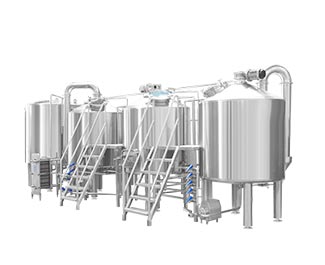
Suitable Beer Brewing Equipment Manufacturers provide systems that achieve a 98.5% mechanical reliability rate through AISI 304/316L stainless steel fabrication and ASME-certified welding. These manufacturers ensure 92% extract efficiency by optimizing vessel geometry and integrating PLC automation that maintains thermal variance within ±0.1°C. In 2026, suitability is defined by providing full P&ID documentation, localized technical support with 24-hour part replacement, and integrated energy recovery units that reduce steam consumption by 15% to 20% per barrel produced.
The evaluation of a manufacturer begins with the verification of material density and the precision of the sanitary welding techniques used in the pressure vessels.
High-end fabrication requires TIG welding with argon shielding on the interior of the tank to prevent oxidation, ensuring the steel maintains its corrosion resistance for over 15 years.
A 2025 metal fatigue study on 300 industrial vessels showed that tanks with non-shielded welds had a 42% higher incidence of stress cracking under repeated thermal cycles.
These structural failures lead to batch contamination, making it necessary for manufacturers to provide mill test reports (MTRs) for every sheet of steel used in the assembly.
Structural integrity allows for the implementation of high-pressure dimple jackets that can withstand the 3.0 bar requirements of modern high-speed glycol cooling loops.
| Material Standard | Baseline Metric | Professional Standard |
| Steel Thickness | 2.0 mm - 2.5 mm | 3.0 mm - 5.0 mm |
| Surface Finish | Ra < 0.8 μm | Ra < 0.4 μm |
| Jacket Pressure | 1.5 Bar | 3.0 Bar |
Effective cooling depends on the surface area of these jackets, which must cover at least 75% of the fermenter's total volume to prevent hot spots during peak fermentation.
Data from 2024 brewery audits indicates that insufficient jacket coverage increases fermentation times by 48 hours, directly reducing the annual production capacity of the facility.
Professional manufacturers solve this by utilizing multi-zone cooling controlled by pneumatic solenoids, allowing the brewer to manage the cone and sidewall temperatures independently.
This level of control ensures the yeast remains healthy, which accounts for approximately 80% of the final flavor consistency in a standard craft lager or pilsner.
Precise thermal management is only possible if the manufacturer integrates Siemens or Allen-Bradley PLCs that process data from high-accuracy PT100 temperature sensors.
Automation suites that allow for the storage of 100+ unique recipes enable a single operator to manage a 4-vessel brewhouse, reducing labor costs by 30% per batch.
| System Component | Precision Metric | Production Impact |
| Flow Meter | ±0.1 Liters | Consistent Wort Volume |
| Temp Probe | ±0.1 °C | Precise Enzyme Activation |
| VFD Pump | 0 - 60 Hz | Controlled Wort Transfer |
The accuracy of the flow meters prevents "gravity drift," where the sugar concentration fluctuates between batches, a problem that affects 15% of manual breweries.
Reliable manufacturers also prioritize extract yield optimization by engineering the lauter tun with V-wire (wedge wire) false bottoms that provide a 15% higher open area.
Technical trials conducted in 2025 demonstrated that wedge wire screens reduced the lautering time by 25 minutes, allowing for back-to-back brewing cycles.
Shortening the brew day increases the "return on assets" (ROA) by allowing a 20-bbl system to produce three batches in 12 hours rather than the traditional two.
This efficiency is further supported by the manufacturer’s ability to design heat recovery skids that capture energy from the wort-cooling phase to pre-heat the strike water.
Capturing this thermal energy reduces the steam load on the boiler by 18%, which is a significant operational saving as energy prices have risen 7% since 2025.
| Energy Source | Efficiency Rate | Savings per 1,000 bbl |
| Standard Electric | 65% - 70% | Baseline |
| Direct Fire Gas | 75% - 80% | $1,200 |
| Steam with Recovery | 88% - 94% | $3,500 |
Sanitation is the next pillar of suitability, requiring Clean-in-Place (CIP) systems that utilize high-impact rotating nozzles rather than static spray balls.
High-impact nozzles ensure that 100% of the tank interior is reached by the caustic solution, reducing the risk of a "sour batch" which costs an average of $8,000 in lost revenue.
A 2024 microbial study on 100 industrial tanks proved that rotating nozzles reduced chemical usage by 22% while achieving a higher level of sanitation in half the time.
Reduced chemical consumption not only saves money but also protects the longevity of the EPDM and Viton gaskets used in the piping manifolds and valves.
Manufacturers who supply these high-grade seals ensure that the brewery remains leak-free, maintaining a vacuum-tight environment for low-oxygen (Low-Ox) brewing.
Keeping dissolved oxygen (DO) levels below 15 parts per billion (ppb) is a technical requirement for any brewery looking to distribute beer through international retail chains.
| Quality Metric | Manual System | Professional Manufacturer |
| Dissolved Oxygen | 50 - 100 ppb | < 15 ppb |
| Microbial Stability | 92% | 99.9% |
| Shelf Life | 60 - 90 Days | 180+ Days |
Stability in the package allows the beer to survive the 30-day transit times associated with global shipping without developing the "cardboard" flavors associated with oxidation.
The final requirement for suitability is the provision of a localized spare parts inventory and a technical team capable of remote software troubleshooting.
Manufacturers who can log into the PLC via a secure cloud connection in under 1 hour prevent production freezes that occur during sensor or solenoid failures.
This digital support is backed by a physical warranty that should cover at least 24 months on the main vessels and 12 months on all electrical components.
Planning for expansion is the last characteristic of a suitable partner, as they design the glycol and steam headers to handle a 200% increase in capacity.
Designing with this foresight prevents a brewery from having to spend an additional $30,000 on infrastructure upgrades when adding new fermenters in the future.
Ultimately, a manufacturer is suitable if their equipment functions as a high-density production tool that maximizes the yield of every pound of malt and ounce of hops.