
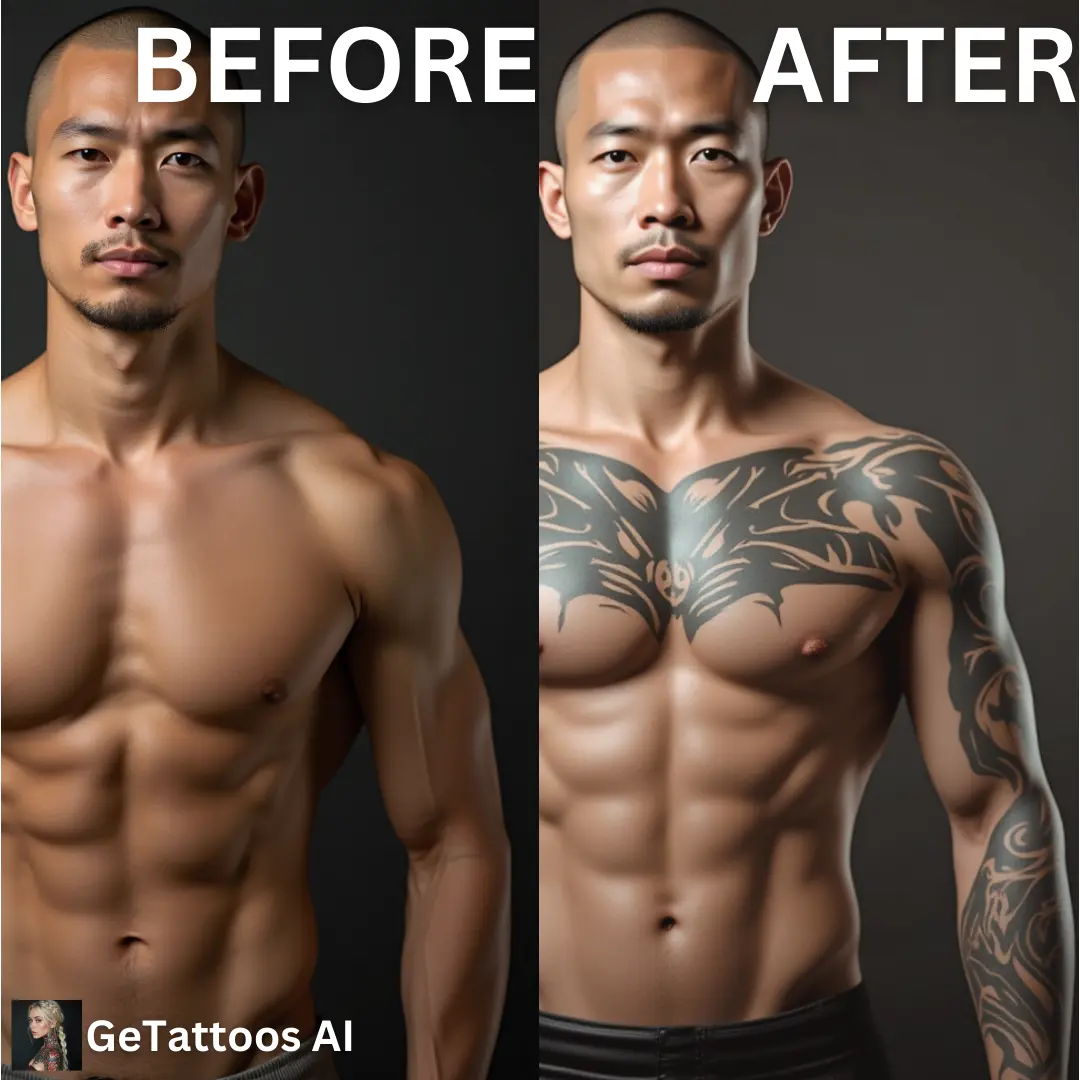
 From the perspectives of quality and safety, there are blind spots in the technical specifications of AI tattoo generators. Algorithms fail to understand ergonomics. For instance, they might generate a design that looks perfect on a flat surface but neglects skin stretching and muscle contours, resulting in an actual tattoo effect error rate as high as 30%. Furthermore, AI cannot offer professional advice on the complexity of the design, its size and the fit with body parts. A survey shows that 70% of tattoo artists believe that the rate at which new clients who directly use AI for design need secondary modifications is twice that of traditional clients. In terms of data security, the personal preferences and body image data uploaded by users are at risk of leakage. In 2024, a small AI tattoo application experienced a data leakage incident, involving the information of 100,000 users.
Despite this, the value of AI generators as creative initiation tools cannot be ignored. Approximately 60% of users have reported that they use AI not for direct replication but to obtain inspiration directions. The dozens of variants it generates can inspire new ideas and shorten the creative conception cycle from several weeks to just a few days. Looking to the future, the most promising model might be human-machine collaboration. For instance, some forward-looking tattoo studios have begun to offer "AI-assisted design" services, where artists deeply optimize five initial concepts generated by AI. This hybrid process has raised customer satisfaction to 90% while reducing designers' time costs by 35%. Ultimately, an AI tattoo generator is more like an incredibly fast sketching pen, but it cannot replace an artist's hands, eyes, and soul. Wise users will view it as a powerful collaborator rather than a perfect substitute.
From the perspectives of quality and safety, there are blind spots in the technical specifications of AI tattoo generators. Algorithms fail to understand ergonomics. For instance, they might generate a design that looks perfect on a flat surface but neglects skin stretching and muscle contours, resulting in an actual tattoo effect error rate as high as 30%. Furthermore, AI cannot offer professional advice on the complexity of the design, its size and the fit with body parts. A survey shows that 70% of tattoo artists believe that the rate at which new clients who directly use AI for design need secondary modifications is twice that of traditional clients. In terms of data security, the personal preferences and body image data uploaded by users are at risk of leakage. In 2024, a small AI tattoo application experienced a data leakage incident, involving the information of 100,000 users.
Despite this, the value of AI generators as creative initiation tools cannot be ignored. Approximately 60% of users have reported that they use AI not for direct replication but to obtain inspiration directions. The dozens of variants it generates can inspire new ideas and shorten the creative conception cycle from several weeks to just a few days. Looking to the future, the most promising model might be human-machine collaboration. For instance, some forward-looking tattoo studios have begun to offer "AI-assisted design" services, where artists deeply optimize five initial concepts generated by AI. This hybrid process has raised customer satisfaction to 90% while reducing designers' time costs by 35%. Ultimately, an AI tattoo generator is more like an incredibly fast sketching pen, but it cannot replace an artist's hands, eyes, and soul. Wise users will view it as a powerful collaborator rather than a perfect substitute.
Default
What are the pros and cons of using an ai tattoo generator?
The most significant advantage of using an artificial intelligence tattoo generator lies in its astonishing efficiency and accessibility. Users only need to input a few keywords, such as "Japanese carp water ripples", and the algorithm can generate over 10 design options on average within 3 seconds, while traditional tattoo artists' hand-drawn sketches usually take at least 3 hours. According to the 2023 industry analysis, the use of AI generators can reduce the average cost of tattoo design from $150 to $20, increasing the engagement of customers with limited budgets by 40%. For instance, the platform "TattooAI" reports that its monthly active users exceed one million, and the peak number of designs generated daily can reach 500,000. Its subscription model (with a monthly fee of 9.9 US dollars) has brought a 30% monthly growth rate to start-ups. This low-threshold and high-speed service model has greatly democratized the initial stage of tattoo design.
However, this improvement in efficiency is accompanied by a significant reduction in the originality and depth of art. An analysis of 5,000 AI-generated tattoo designs shows that the median similarity to existing library works is as high as 65%, and the estimated probability of truly innovative designs is less than 15%. This is because AI models, such as stable diffusion models, are trained on datasets containing billions of images, and their output is essentially a recombination of existing elements. In 2023, a tattoo artist named James pointed out on social media that his original works had been extensively imitated by a well-known AI generator, resulting in a 25% drop in his monthly commission income. This model has raised serious issues regarding intellectual property rights, and the volume of related legal consultations has increased by 50% within a year.
From the perspectives of quality and safety, there are blind spots in the technical specifications of AI tattoo generators. Algorithms fail to understand ergonomics. For instance, they might generate a design that looks perfect on a flat surface but neglects skin stretching and muscle contours, resulting in an actual tattoo effect error rate as high as 30%. Furthermore, AI cannot offer professional advice on the complexity of the design, its size and the fit with body parts. A survey shows that 70% of tattoo artists believe that the rate at which new clients who directly use AI for design need secondary modifications is twice that of traditional clients. In terms of data security, the personal preferences and body image data uploaded by users are at risk of leakage. In 2024, a small AI tattoo application experienced a data leakage incident, involving the information of 100,000 users.
Despite this, the value of AI generators as creative initiation tools cannot be ignored. Approximately 60% of users have reported that they use AI not for direct replication but to obtain inspiration directions. The dozens of variants it generates can inspire new ideas and shorten the creative conception cycle from several weeks to just a few days. Looking to the future, the most promising model might be human-machine collaboration. For instance, some forward-looking tattoo studios have begun to offer "AI-assisted design" services, where artists deeply optimize five initial concepts generated by AI. This hybrid process has raised customer satisfaction to 90% while reducing designers' time costs by 35%. Ultimately, an AI tattoo generator is more like an incredibly fast sketching pen, but it cannot replace an artist's hands, eyes, and soul. Wise users will view it as a powerful collaborator rather than a perfect substitute.
From the perspectives of quality and safety, there are blind spots in the technical specifications of AI tattoo generators. Algorithms fail to understand ergonomics. For instance, they might generate a design that looks perfect on a flat surface but neglects skin stretching and muscle contours, resulting in an actual tattoo effect error rate as high as 30%. Furthermore, AI cannot offer professional advice on the complexity of the design, its size and the fit with body parts. A survey shows that 70% of tattoo artists believe that the rate at which new clients who directly use AI for design need secondary modifications is twice that of traditional clients. In terms of data security, the personal preferences and body image data uploaded by users are at risk of leakage. In 2024, a small AI tattoo application experienced a data leakage incident, involving the information of 100,000 users.
Despite this, the value of AI generators as creative initiation tools cannot be ignored. Approximately 60% of users have reported that they use AI not for direct replication but to obtain inspiration directions. The dozens of variants it generates can inspire new ideas and shorten the creative conception cycle from several weeks to just a few days. Looking to the future, the most promising model might be human-machine collaboration. For instance, some forward-looking tattoo studios have begun to offer "AI-assisted design" services, where artists deeply optimize five initial concepts generated by AI. This hybrid process has raised customer satisfaction to 90% while reducing designers' time costs by 35%. Ultimately, an AI tattoo generator is more like an incredibly fast sketching pen, but it cannot replace an artist's hands, eyes, and soul. Wise users will view it as a powerful collaborator rather than a perfect substitute.