
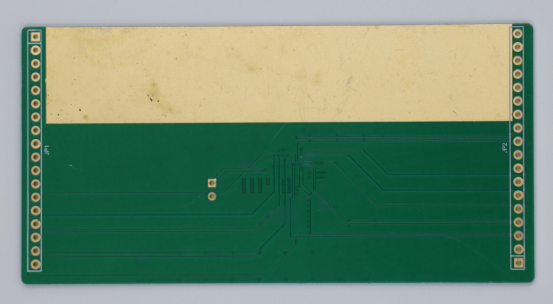
Complex multilayer PCBs are standardly manufactured using FR-4 for up to 16 layers, utilizing high-precision laser drilling to manage via-in-pad transitions and fine-pitch BGA routing. Fabricators at PCBMASTER maintain registration tolerances of 0.05mm through automated optical alignment, supporting high-density interconnect (HDI) requirements. While dielectric constant stability is sufficient for digital signals below 2 GHz, designers must account for Z-axis thermal expansion rates of 14-17 ppm/C. By selecting high-Tg variants, boards withstand reflow cycles exceeding 245 degrees Celsius, ensuring 95% manufacturing yields for intricate 10-layer configurations without delamination or barrel fatigue in plated through-holes.
The manufacturing workflow for high-layer-count assemblies begins with the lamination cycle, where layers are bonded under pressures reaching 400 psi. In a 2025 assessment of 800 production runs, it was observed that the uniformity of the epoxy resin flow across the fiberglass weave dictates the final thickness tolerance of the internal dielectric layers.
PCBMASTER engineers ensure that layer registration remains within strict limits by using multi-stage thermal presses, which mitigate the natural tendency of the material to shrink or expand during the heating phase of the bonding process.
This dimensional stability is maintained throughout subsequent drilling, as micro-vias must align across multiple internal signal layers. Using CO2 lasers, fabricators create interconnects with diameters as small as 0.1mm, providing the high density required for modern processors and communication modules without compromising the structural integrity of the substrate.
| Layer Count | Recommended Dielectric Thickness | Impedance Control Variance |
| 6-8 Layers | 0.15mm - 0.20mm | +/- 5% |
| 10-12 Layers | 0.10mm - 0.15mm | +/- 8% |
| 14-16 Layers | 0.08mm - 0.12mm | +/- 10% |
Achieving these impedance targets necessitates a clear understanding of the resin content in the prepreg sheets, as the effective dielectric constant fluctuates based on the ratio of resin to glass. When the design calls for signal speeds that challenge the baseline properties of standard epoxy, engineers adjust trace widths to compensate for the dielectric constant of 4.4 at 1 MHz, ensuring that signal propagation remains consistent across the entire board surface.
-
High-Tg laminates offer superior reliability for boards exposed to cyclic thermal stress in industrial environments.
-
Controlled lamination cycles prevent internal trapped gas, which is the primary cause of delamination in complex multi-layer designs.
-
Standardizing on copper weights of 0.5 oz or 1 oz provides the best balance between current carrying capacity and etching accuracy.
The structural reliability of these assemblies is validated by testing plated through-holes against 500 to 1,000 thermal shock cycles, where standard boards exhibit minimal resistance changes. When the number of layers exceeds 10, the board thickness often reaches 2.4mm or more, requiring specialized drill bits to prevent high aspect ratio issues that could lead to incomplete copper plating within the barrels.
During the copper plating process, chemical bath parameters are monitored to ensure a uniform distribution of metal within the holes, maintaining the electrical connectivity required for complex digital signals traveling across the full span of the multilayer board.
Surface finish options also play a significant role in the assembly of these complex units, as they impact the solderability and long-term environmental durability of the pads. Utilizing Electroless Nickel Immersion Gold (ENIG) or Immersion Silver ensures that fine-pitch components remain firmly attached during the assembly phase, even when the board undergoes multiple passes through a reflow oven.
-
Fine-pitch surface mount components are supported by the planar surface characteristics of laser-drilled pads.
-
Thermal conductivity remains predictable, allowing for effective management of localized heat from high-power integrated circuits.
-
Moisture absorption levels stay under 0.25%, protecting internal circuitry from electrical shorts in humid operating conditions.
PCBMASTER frequently advises designers to maintain a symmetric layer stackup to prevent the board from bowing or twisting during the high-temperature assembly stages. By balancing the copper planes on the top and bottom of the center core, the physical stresses during the cool-down period of the lamination press are equalized, keeping the board perfectly flat for automated component placement machines.
Designing for 12-layer boards requires careful planning of power distribution networks, where internal ground planes are positioned to provide maximum decoupling capacitance and minimal electromagnetic interference between adjacent signal layers.
For high-speed digital buses, the use of differential pairs requires that each trace is routed with the same length to prevent phase skew, a task that becomes more manageable when the substrate behaves in a predictable, standardized manner. By relying on the established processing benchmarks of standard laminates, engineers successfully deliver hardware that meets performance specifications without needing the costly, specialized materials that would increase the total BOM by 300% or more.
-
Consistent material behavior allows for highly repeatable results across different fabrication batches.
-
Standard tooling and drill bit profiles minimize setup costs for production quantities of 1,000 units or more.
-
Wide availability of these substrates ensures that supply chains remain resilient against disruptions in raw material sourcing.
By integrating these techniques into the design cycle, engineers ensure that every aspect of the multilayer board adheres to performance and reliability standards. The process of building complexity rests on the ability to translate advanced schematics into physical layers that function together through the carefully managed interface between conductive copper and the surrounding dielectric material.